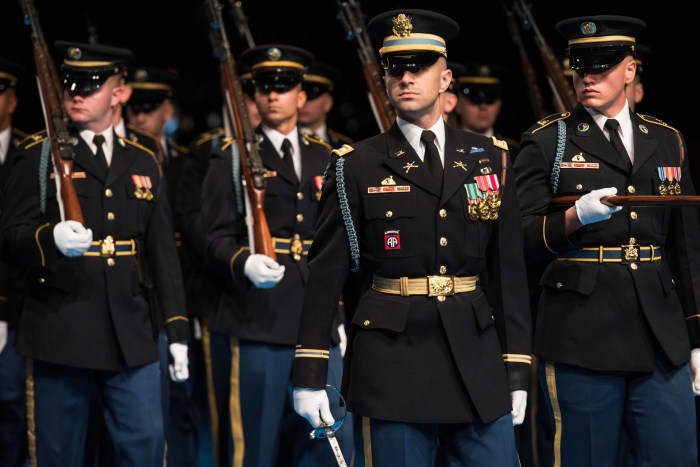
Military and geopolitics intertwine in ways that shape our world, influencing everything from international alliances to the very fabric of modern warfare. This topic is rich with complexity as it explores how military strategies are not only guided by technology but also by historical conflicts that redefine borders and power dynamics.
As we dive deeper, we’ll uncover the pivotal role military alliances play in shaping geopolitical strategies, the ethical dilemmas surrounding military engagement, and the interplay between politics and military operations that often determine the course of nations.
Military Strategies in Geopolitical Context

Military strategies play a crucial role in shaping geopolitical landscapes, influencing international relations and alliances. The dynamics of military power, technological advancements, and historical conflicts intertwine to create a complex web that defines global interactions. Understanding these elements provides insight into how nations navigate challenges and fortify their positions on the world stage.
Role of Military Alliances in Shaping Global Geopolitical Strategies
Military alliances serve as pivotal frameworks in establishing security dynamics and geopolitical strategies among nations. These alliances can deter aggression, enhance collective defense capabilities, and promote stability in volatile regions. Key examples of influential military alliances include NATO and the ASEAN Defense Ministers’ Meeting-Plus (ADMM-Plus).
The significance of military alliances can be summarized as follows:
- Deterrence: Alliances create a united front that discourages potential aggressors from initiating conflict, knowing that they face a coalition of nations.
- Resource Sharing: Member nations can pool resources, share intelligence, and conduct joint exercises, enhancing operational readiness and efficiency.
- Political Cohesion: Alliances foster political unity among member states, encouraging collaborative responses to global challenges such as terrorism and cyber threats.
Impact of Military Technology Advancements on Modern Warfare and International Relations
The rapid advancement of military technology has dramatically transformed modern warfare and its implications on international relations. Innovations such as drones, cyber warfare capabilities, and artificial intelligence have reshaped strategic considerations for military planners.
Some notable impacts include:
- Precision Warfare: Modern technologies allow for targeted strikes with minimized collateral damage, changing the way conflicts are conducted and perceived.
- Asymmetric Warfare: Non-state actors leverage advanced technology to challenge traditional military powers, complicating conventional warfare dynamics.
- Cyber Warfare: The rise of cyber capabilities introduces new arenas of conflict, leading to tensions that transcend physical borders and traditional military strategies.
Examples of Historical Military Conflicts that Altered Geopolitical Landscapes
Throughout history, various military conflicts have significantly shaped geopolitical boundaries and power structures. These conflicts often resulted in shifts in alliances, territorial changes, and new security paradigms.
Key historical examples include:
- World War I: The aftermath of this conflict led to the dissolution of empires and the creation of new nations, which redefined political landscapes in Europe and beyond.
- World War II: The geopolitical aftermath resulted in the Cold War division between the Western bloc and Eastern bloc, establishing long-lasting military and ideological rivalries.
- The Vietnam War: This conflict not only affected Vietnam but also influenced U.S. foreign policy, leading to shifts in how superpowers engaged in global conflicts.
“Military alliances can deter aggression, enhance collective defense capabilities, and promote stability in volatile regions.”
Legal and Ethical Issues in Military Engagement
Military engagement is not solely defined by strategy and tactical advantage; it is also deeply embedded in a framework of legal and ethical considerations. As nations navigate the complexities of warfare, international laws and ethical standards play a critical role in shaping operations and guiding military conduct. Understanding these frameworks is essential for military leaders, policymakers, and the global community as they address the ramifications of military actions on a sovereign state and its populace.
International Laws Governing Military Interventions
International law establishes a set of rules and norms that govern military actions, particularly concerning state sovereignty and the legality of interventions. The core principles stem from various treaties, conventions, and customary laws, including the United Nations Charter, which emphasizes the importance of state sovereignty and non-interference in domestic affairs. The legality of military interventions can generally be categorized into two main areas: self-defense and humanitarian intervention.The implications of these laws on sovereignty are profound.
When a state intervenes militarily without the consent of the host nation, it risks violating that nation’s sovereignty, which can lead to international condemnation and potential retaliatory actions. The following points highlight key aspects of international law regarding military interventions:
- The concept of state sovereignty protects nations from external interference unless justified by international law.
- Self-defense, as Artikeld in Article 51 of the UN Charter, allows states to respond to armed attacks, but must be proportional and necessary.
- Humanitarian interventions, often debated, aim to protect civilians from atrocities but can be contentious regarding legality and legitimacy.
Ethical Considerations Surrounding Drone Use in Combat Zones
The use of drones in military operations has revolutionized modern warfare, offering notable advantages such as precision strikes and reduced risk to military personnel. However, this technological advancement brings significant ethical dilemmas, particularly concerning civilian casualties and the psychological impact on both operators and affected populations.The ethical discourse around drone warfare is complex and can be summarized through the following considerations:
- The principle of proportionality: Military actions must balance military advantage against potential civilian harm.
- Accountability and transparency: The remote nature of drone operations complicates accountability for decisions leading to fatalities.
- The psychological impact on operators: Drone pilots often experience unique stress and trauma, contrasting with traditional combat experiences.
“The use of drones blurs the lines of accountability and raises critical questions about the ethics of remote warfare.”
Legal Ramifications of War Crimes and Accountability for Military Leaders
War crimes are serious breaches of international law that occur during armed conflict, leading to significant consequences for individuals and nations alike. The legal framework surrounding war crimes is primarily governed by the Geneva Conventions and the Rome Statute of the International Criminal Court (ICC). The implications for military leaders accused of war crimes can be severe, including prosecution and imprisonment.The accountability mechanisms for war crimes emphasize the importance of adhering to international humanitarian law and include:
- Individual criminal responsibility: Leaders can be held accountable for actions taken during military operations that violate established laws.
- Universal jurisdiction: Some nations assert jurisdiction over war crimes regardless of where they occurred, allowing for prosecution beyond national borders.
- International tribunals: Courts such as the ICC are established to prosecute war crimes, ensuring that perpetrators are brought to justice.
The legal and ethical frameworks governing military engagement are crucial for maintaining order and accountability in international relations. As conflicts persist and evolve, adherence to these principles remains imperative for the protection of human rights and the promotion of global stability.
The Influence of Politics and Government on Military Operations
The intersection of military operations and political governance is a complex web that influences how armed forces function. Domestic political climates, leadership dynamics, and historical contexts significantly shape military capabilities, funding, and strategic decisions. Understanding this relationship is crucial to grasp how nations engage in warfare and defense.The domestic political landscape plays a pivotal role in military funding and resource allocation.
Budgetary decisions are often influenced by the prevailing political ideologies, party agendas, and public opinion. For instance, during periods of political stability and consensus, military funding may see increases aimed at modernization or expansion. Conversely, in times of political strife or public dissent, defense budgets can face cuts, leading to challenges in operational readiness. This dynamic ensures that military priorities are often realigned to suit the current government’s goals and the electorate’s expectations.
Relationship Between Military Leadership and Civilian Government Officials
The synergy between military leadership and civilian government officials is essential for effective governance and strategic military operations. Strong communication and mutual respect can enhance operational efficiency and responsiveness to emerging threats. In contrast, a fraught relationship can lead to mismanagement and distrust, which may hamper military effectiveness.Key aspects of this relationship include:
- Policy Making: Civilian leaders set the strategic direction, while military leaders provide the necessary expertise to implement policies effectively.
- Resource Allocation: Military leaders often advocate for funding based on strategic needs, while civilian officials weigh these requests against broader national priorities.
- Accountability: The military must remain accountable to civilian authorities to ensure democratic oversight, balancing military autonomy with civilian control.
The interplay between military and civilian leadership can influence the overall effectiveness of a nation’s military operations, as seen in various historical contexts.
Comparison of Military Strategies Under Different Political Regimes
Throughout history, military strategies have evolved significantly in response to the political regimes in power. Regimes ranging from democratic to authoritarian have employed different military doctrines based on their ideologies and governance styles.The following are examples of how military strategies differ across political regimes:
| Political Regime | Military Strategy | Historical Example |
|---|---|---|
| Democracy | Focus on coalition-building and multilateral operations. | NATO operations in the Balkans during the 1990s. |
| Authoritarian | Emphasis on rapid, decisive action and overwhelming force. | Blitzkrieg tactics used by Nazi Germany in World War II. |
| Communist | Utilization of guerrilla warfare and protracted conflicts. | Vietnam War strategy employed by the Viet Cong. |
Understanding these variations in strategy provides insight into how political ideologies shape military operations and the effectiveness of a nation’s armed forces in achieving its objectives.
Closing Summary
In summary, the nexus of military and geopolitics is a critical field of study that reveals much about how nations operate on the global stage. From legal considerations to the influence of political regimes on military strategies, understanding these elements is vital for grasping the complexities of international relations and our world’s future.
Popular Questions
What are military alliances?
Military alliances are agreements between countries to provide mutual support in case of conflict, which can significantly affect global geopolitical strategies.
How has military technology impacted warfare?
Advancements in military technology have transformed combat tactics, enhanced communication, and changed the landscape of international relations.
What are the legal implications of military interventions?
Military interventions are governed by international law, which impacts national sovereignty and mandates accountability for actions taken during conflict.
What role do politics play in military funding?
Domestic political climates can greatly influence military budgets, affecting resource allocation and overall military readiness.
What ethical concerns arise from using drones in combat?
The use of drones raises ethical questions around accountability, civilian casualties, and the implications of remote warfare on military engagement.


![[100+] Astrology Backgrounds | Wallpapers.com](https://dlpusch.info/wp-content/uploads/2025/07/astrological-circle-of-the-horoscope-icons-star-constellations-of-12-zodiac-signs-astrological-signs-for-calendar-horoscope-isolated-on-a-background-vector-300x225.jpg)

